






How Infrastructure Development Can Affect Gurgaon Property Prices
Discover how infrastructure development can affect Gurgaon property prices. Explore expressway links, metro lines, sector trends, and capital appreciation.

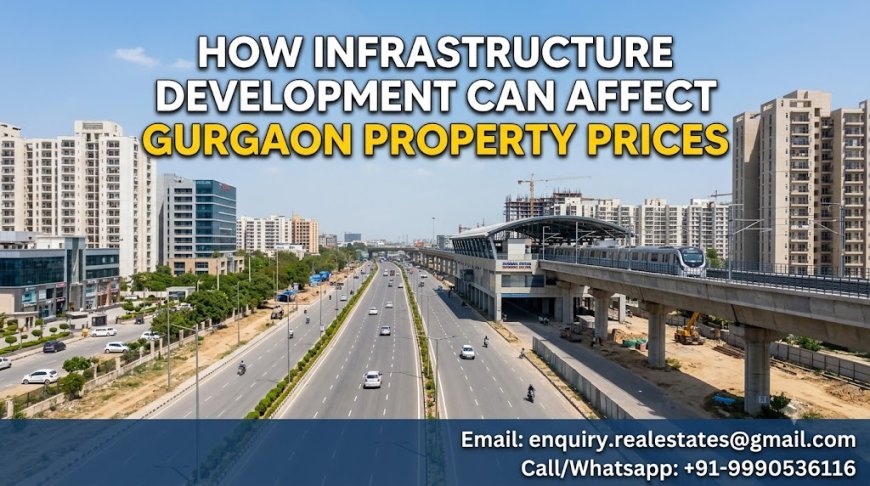
Gurgaon, official name Gurugram, has evolved from a quiet suburban outpost into one of Asia’s most vibrant corporate and luxury residential hubs. For investors, homeowners, and urban analysts, understanding how infrastructure development can affect Gurgaon property prices is essential to navigating this fast-paced market. High-speed expressways, multi-level flyovers, rapid transit lines, and master-planned arterial roads do not merely connect points on a map they fundamentally redefine land values, rental yields, and urban density. Exploring Ireo New Project Gurgaon opportunities reveals how modern master-planned communities strategically align with these high-growth transit corridors to deliver sustainable long-term value.
In this comprehensive guide, we examine the precise mechanisms behind infrastructure-led property appreciation in Gurgaon. We cover key micro-markets including Golf Course Extension Road, Southern Peripheral Road (SPR), and Dwarka Expressway. You will gain actionable insights into historical price trends, transit-oriented development frameworks, capital value multipliers, and strategic investment approaches designed for the modern real estate ecosystem.
How Infrastructure Development Can Affect Gurgaon Property Prices
Infrastructure acts as the single primary catalyst for real estate valuation in emerging urban markets. In Gurgaon, where private real estate development frequently outpaces public infrastructure rollout, the actual delivery of road, rail, and utility networks creates immediate, compounding price spikes.
When a new transit corridor becomes operational, travel times decrease, accessibility expands, and commercial activity follows. This chain reaction shifts land use from low-density agricultural or holding patterns into high-density commercial and premium residential zones. Consequently, capital values experience structural shifts rather than simple incremental inflation.
Strategic Impact of Infrastructure Development in Gurgaon Property Prices
The relationship between transport infrastructure and real estate values operates on a predictable curve. Early conceptualization brings speculative interest, while physical construction validates developer investments. The final operational launch triggers end-user demand and corporate relocation.
Understanding how infrastructure development can affect Gurgaon property prices requires analyzing four major economic drivers:
-
Travel Time Reduction (Efficiency Premium): Buyers gladly pay a premium for properties that reduce daily commutes to key corporate nodes such as Cyber City, Golf Course Road, and Sohna Road.
-
Access to Commercial Ecosystems: Major expressways draw Fortune 500 offices, Grade-A IT parks, and retail centers, creating localized housing demand for corporate executives.
-
Livability & Social Infrastructure Upgrades: Modern transit lines feature underground stormwater drainage, high-capacity power lines, and planned civic amenities, improving overall quality of life.
-
Institutional Capital Inflow: Infrastructure completion lowers project execution risks, attracting global private equity funds and top-tier national developers.
Key Infrastructure Corridors Driving Real Estate Appreciation in Gurgaon
Dwarka Expressway & Central Peripheral Road (CPR)
The Dwarka Expressway (Northern Peripheral Road) stands as one of Northern India's most significant urban infrastructure projects. Designed as an 8-lane elevated highway linking Mahipalpur in Delhi to Kherki Daula in Gurgaon, this corridor has transformed northern and western Gurgaon sectors.
-
Capital Appreciation Trends: Sectors along the expressway (Sectors 99 to 113) have witnessed price surges exceeding 150% over a five-year cycle.
-
Delhi-Airport Connectivity: Direct access to Indira Gandhi International (IGI) Airport and the Diplomatic Enclave II has created an ultra-luxury residential market.
-
Mayapuri Extension Proposal: Ongoing extensions to Delhi’s Mayapuri Ring Road promise to further decongest southern entry points, maintaining upward momentum on property values.
Southern Peripheral Road (SPR) Signal-Free Revamp & Metro Link
The Southern Peripheral Road (SPR) links the Delhi-Gurgaon Expressway (NH-48) with Golf Course Extension Road. Its transformation into a signal-free corridor with multi-level flyovers and an integrated metro line has elevated its status from a bypass to a primary luxury belt.
-
Signal-Free Flyovers: New flyovers at major junctions like Vatika Chowk cut transit times to Cyber City down to under 15 minutes.
-
Double-Decker Viaduct Architecture: The planned SPR expansion incorporates an innovative double-decker structure carrying elevated road traffic alongside the new Gurgaon Metro Expansion Loop.
-
Micro-Market Impact: Residential sectors along SPR (Sectors 68 through 75) report annual capital value increases between 20% and 35%.
Golf Course Extension Road (GCER) Transformation
Golf Course Extension Road is widely regarded as the gold standard for premium residential real estate in Gurgaon. Connecting Golf Course Road to Sohna Road, this belt blends established social infrastructure with upcoming infrastructure enhancements.
-
Circle Rate Revisions: Steep upward revisions in government circle rates reflect high demand for luxury 3 BHK and 4 BHK apartments.
-
Corporate Hub Proximity: Proximity to major commercial complexes along Golf Course Road keeps rental yields high, averaging 3.8% to 4.5%.
-
Seamless Upgrades: The upcoming 12-kilometer elevated road network from Ghata Chowk ensures smooth travel toward both Delhi and Faridabad.
Delhi-Mumbai Expressway & Sohna Elevated Highway
The opening of the Delhi-Mumbai Expressway (starting at Sohna) and the six-lane elevated Sohna Road highway has opened up South Gurgaon for major residential and commercial developments.
-
Reduced Commute Times: Elevated expressways have cut travel time between Rajiv Chowk and Sohna from 45 minutes to just 15 minutes.
-
Industrial & Logistics Growth: High-speed freight access has attracted logistics parks, technology manufacturing units, and industrial hubs, creating end-user housing demand.
-
Value Positioning: South Gurgaon offers an accessible entry point for home buyers seeking township living at competitive prices compared to central sectors.
Gurgaon Metro Expansion Loop (GMRL) & Namo Bharat RRTS
Public rail transit upgrades represent the next phase of capital appreciation across Gurgaon. The Gurugram Metro Rail Limited (GMRL) expansion loop spans over 26 kilometers with 26 planned stations, connecting Old Gurgaon with New Gurgaon and the Cyber City network.
-
Catchment Area Price Surges: Historical data shows that residential projects within 1 kilometer of a metro station experience an additional 12% to 18% price premium over non-metro properties.
-
RRTS Integration: The Namo Bharat Regional Rapid Transit System (RRTS) connecting Delhi, Gurgaon, Snoh, and Alwar will provide regional connectivity, transforming Gurgaon into a central transit node for the entire National Capital Region (NCR).
The Micro-Market Multiplier: Sector-Wise Capital Growth Analysis
Infrastructure impact varies depending on sector location, layout quality, and developer profile. Examining specific sectors reveals how macro infrastructure translates into individual property values.
Established Prime Belts (Golf Course Road & GCER)
Golf Course Road and Golf Course Extension Road represent mature micro-markets where infrastructure enhancements preserve long-term capital and drive steady rental returns.
-
Demographics: Corporate executives, NRIs, and high-net-worth individuals dominate this market.
-
Property Typologies: Ultra-luxury high-rise apartments, penthouses, and branded residences.
-
Price Points: Average values range from ₹22,000 to ₹45,000 per square foot, depending on project specs and precise location.
High-Growth Micro-Markets: Focus on Sector 67A & Neighboring Nodes
Sector 67A sits at the intersection of Sohna Road, Golf Course Extension Road, and the Southern Peripheral Road. This strategic positioning makes it an ideal case study in how transit access boosts property values.
-
Arterial Connectivity: Sector 67A offers immediate access to the main 60-meter sector road network, placing residents within 10 minutes of Golf Course Road and NH-48.
-
Integrated Townships: The presence of master-planned developments like Ireo The Corridors highlights how large-scale gated communities maximize the benefits of local transit projects. Spanning over 37 acres, this project offers extensive sports, healthcare, and recreational facilities that complement external road upgrades.
-
Appreciation Dynamics: Properties in Sector 67A have seen average value gains of 65% over four years. Driven by signal-free SPR upgrades and nearby commercial developments, buyers enjoy both lifestyle convenience and asset growth. Discovering modern living options at Ireo Corridors Sector 67A Gurgaon demonstrates how proximity to major transit corridors continues to attract end-users and investors alike.
Emerging Transit Hubs (New Gurgaon & Expressway Belts)
Sectors 81 through 95 (New Gurgaon) and Sectors 102 through 113 (Dwarka Expressway) offer major growth potential for medium-to-long-term investors.
-
Key Drivers: The completion of the Central Peripheral Road (CPR), the Cloverleaf interchange at NH-48, and the upcoming Global City development project.
-
Price Drivers: Lower entry costs relative to Golf Course Road allow higher percentage gains as local infrastructure matures.
-
Supply Profile: Large integrated townships, SCO (Shop-Cum-Office) plots, and high-density residential high-rises.
Infrastructure Dynamics and Real Estate Valuation Framework
To properly evaluate real estate opportunities, investors must understand the specific market forces that link public works to property pricing.
Pre-Construction vs. Post-Operational Appreciation Cycles
Property appreciation follows distinct stages relative to infrastructure construction milestones:
-
Announcement Stage (Speculative Risk): Prices rise 10% to 15% on initial government announcements and master plan publications. Execution risks remain high.
-
Construction Stage (Holding Period): Values appreciate moderately (5% to 8% annually) as physical progress occurs. Construction inconveniences can temporarily suppress local tenant demand.
-
Operational Completion Stage (Value Realization): As roads open and transit lines begin operation, prices surge by 25% to 50%. End-users move in, and rental occupancy rates rise sharply.
Rental Yield Escalation and Corporate Employment Integration
Major infrastructure investments attract commercial corporate park developers. As Fortune 500 offices set up operations along corridors like Golf Course Extension Road and SPR, tenant demand increases for nearby homes.
-
Rental Yield Gains: Average residential rental yields in transit-accessible Gurgaon sectors have risen from 2.8% to nearly 4.2%.
-
Expat & Executive Housing: Luxury gated communities with comprehensive lifestyle amenities command premium rents from corporate executives seeking short, easy commutes.
Social Infrastructure Synergy: Healthcare, Education, and Retail
Transport links accelerate the development of social infrastructure. Top hospitals, international schools, and retail malls cluster along major expressways.
-
Education Centers: Leading international schools establish campuses along Sohna Road, GCER, and Dwarka Expressway to serve surrounding residential sectors.
-
Healthcare Hubs: Multi-specialty hospitals choose locations near major highway interchanges for rapid emergency access across NCR.
-
Retail Destination Arcades: Modern retail hubs, fine dining complexes, and multiplexes develop near major residential clusters, elevating overall neighborhood quality.
Comprehensive Corridor Comparison: Infrastructure vs. Real Estate Impact
The table below outlines key performance metrics across Gurgaon's main real estate corridors:
| Corridor Name | Key Infrastructure Drivers | Avg. Price 2020 (₹/sq. ft.) | Avg. Price 2026 (₹/sq. ft.) | Projected Growth (2026–2030) | Dominant Property Typology |
|
Golf Course Road |
Rapid Metro, Direct Expressway Links |
₹18,000 – ₹24,000 |
₹38,000 – ₹55,000 |
8% – 12% p.a. |
Ultra-Luxury High-Rises & Penthouses |
|
Golf Course Ext. Road |
SPR Flyovers, Metro Loop, Model Roads |
₹8,500 – ₹11,500 |
₹20,000 – ₹28,000 |
12% – 18% p.a. |
Premium Gated Townships & Luxury Floors |
|
Southern Peripheral Road |
Elevated Corridor, Double-Decker Metro |
₹6,500 – ₹8,500 |
₹16,000 – ₹22,000 |
15% – 22% p.a. |
High-Rise Apartments & Mixed-Use Hubs |
|
Dwarka Expressway |
8-Lane Highway, CPR Link, Airport Bypass |
₹5,500 – ₹7,500 |
₹14,500 – ₹24,000 |
14% – 20% p.a. |
Integrated Townships & SCO Complexes |
|
New Gurgaon (81–95) |
CPR, KMP Expressway, Global City Link |
₹4,200 – ₹5,800 |
₹9,500 – ₹14,500 |
12% – 16% p.a. |
Mid-to-Premium High-Rises & Township Housing |
|
Sohna Road / South Gurgaon |
Elevated Highway, Delhi-Mumbai Link |
₹3,800 – ₹5,000 |
₹8,000 – ₹12,000 |
10% – 15% p.a. |
Affordable Luxury, Low-Rise Floors |
Challenges, Risks, and Critical Factors for Property Investors
While infrastructure projects generally increase property values, investors must manage several clear market risks.
Execution Delays & Horizon Risk
Public infrastructure timelines in India can face unexpected delays due to land acquisition challenges, environmental clearances, or contractor execution issues.
-
Carrying Costs: Delays in road or metro construction can stretch investment holding periods, reducing overall annualized returns (IRR).
-
Mitigation Strategy: Focus on corridors where major infrastructure is at least 60% complete or already operational.
Entry Price Compression & Capital Overreach
When a corridor experiences rapid price appreciation, speculative buying can inflate values beyond current micro-market fundamentals.
-
Overpayment Risk: Buying at peak speculative pricing leaves a thin safety margin if broader real estate cycles slow down.
-
Evaluation: Always benchmark launch prices against completed resale options in adjacent mature sectors.
Civic & Environmental Infrastructure Gaps
Rapid transportation development can sometimes outpace essential civic utilities.
-
Waterlogging & Drainage: Insufficient stormwater drainage along secondary sector roads can cause seasonal access issues during monsoon months.
-
Power Grid Capacity: High-density high-rises require dedicated substation links and underground power lines to ensure consistent electricity supply.
Practical Investment Strategies for 2026 and Beyond
Navigating Gurgaon’s infrastructure-driven property market requires a disciplined, structured investment plan. Exploring current options across the city, including new opportunities like Ireo New Project listings, allows buyers to balance value, location, and long-term capital potential effectively.
End-User Acquisition Strategy
End-users should prioritize everyday livability alongside capital appreciation potential.
-
The 15-Minute Rule: Select residential projects located within a 15-minute drive of your primary office node or major transit interchange.
-
Social Ecosystem Access: Confirm that reputable schools, multi-specialty hospitals, and daily retail facilities are fully operational within a 3 to 5-kilometer radius.
High-Yield Portfolio Allocation
Investors seeking monthly rental income should target micro-markets near corporate office corridors.
-
Configuration Choice: Luxury 3 BHK and 4 BHK layouts attract high-earning corporate families and expat tenants, resulting in lower turnover rates.
-
SCO & Retail Assets: Shop-Cum-Office (SCO) plots near expressway exits offer steady rental income alongside strong land value appreciation.
Regulatory Verification & HARERA Due Diligence
Every real estate transaction should include rigorous legal and regulatory checks.
-
HARERA Registration: Verify project registration status, promoter background, and financial filings on the official Haryana Real Estate Regulatory Authority (HARERA) portal.
-
Master Plan Zoning: Confirm that adjoining vacant land is zoned for green belts, public utilities, or residential use to avoid unexpected future construction.
Statistical Overview: Infrastructure Impact on Gurgaon Real Estate
-
151% Growth: Cumulative capital appreciation recorded along the Dwarka Expressway over a 5-year development cycle.
-
125% Growth: Property value surge registered along the Southern Peripheral Road (SPR) following major transit connectivity announcements.
-
12% to 18% Premium: Average pricing advantage enjoyed by residential properties located within 1 kilometer of an operational metro station.
-
35,000+ Units: Total luxury residential supply absorbed along Golf Course Extension Road and SPR over the last 36 months.
-
4.2% Peak Yield: Average rental return achieved by premium gated townships in Sector 67 and Sector 68.
-
Infrastructure Is the Primary Value Driver: Transportation networks directly govern property appreciation rates, rental yields, and urban growth across Gurgaon.
-
Transit-Oriented Development Premium: Properties positioned along operational expressways, signal-free corridors, and metro lines command an immediate 15% to 35% pricing advantage over isolated sectors.
-
SPR & GCER Drive Luxury Demand: The Southern Peripheral Road and Golf Course Extension Road continue to lead as top-performing luxury residential corridors, supported by new flyovers and metro expansions.
-
Timing Matters: Buying during early construction phases yields higher percentage appreciation, while buying operational assets reduces execution risk and delivers immediate rental income.
-
Thorough Due Diligence Is Essential: Always verify HARERA registration, master plan zoning, developer track record, and civic drainage utilities before committing capital.
Frequently Asked Questions
How does infrastructure development affect property prices in Gurgaon?
Infrastructure development improves physical accessibility, cuts daily commute times, and draws commercial investment. These improvements increase end-user demand and rental yields, driving up property prices in connected sectors.
Which Gurgaon infrastructure corridors offer the highest investment potential?
The Southern Peripheral Road (SPR), Golf Course Extension Road, and Dwarka Expressway offer major capital growth potential due to ongoing metro expansions, signal-free road projects, and direct links to Delhi and IGI Airport.
How much do property prices usually rise after a major road or expressway opens?
Property values typically appreciate by 10% to 15% during project announcement, another 15% to 25% during active construction, and up to 25% to 50% once the road becomes fully operational and integrated with local traffic networks.
What impact does metro expansion have on nearby residential property values in Gurgaon?
Residential properties within a 1-kilometer catchment of operational metro stations generally enjoy a 12% to 18% price premium over non-metro properties, supported by strong tenant demand and daily transit convenience.
Final Thoughts
Understanding how infrastructure development can affect Gurgaon property prices gives investors and buyers a clear blueprint for navigating Northern India's most dynamic real estate market. The city's growth continues to be driven by transformative infrastructure from signal-free expressways and rapid metro expansion loops to master-planned utility networks and corporate hubs.
By aligning your property investments with active infrastructure corridors like Golf Course Extension Road, SPR, and Dwarka Expressway, you position your portfolio for long-term capital preservation, strong appreciation, and sustainable rental income. Whether you are an end-user searching for a modern luxury home or an investor building a growth-oriented portfolio, focusing on transit connectivity remains the key to unlocking long-term real estate value in Gurgaon.